
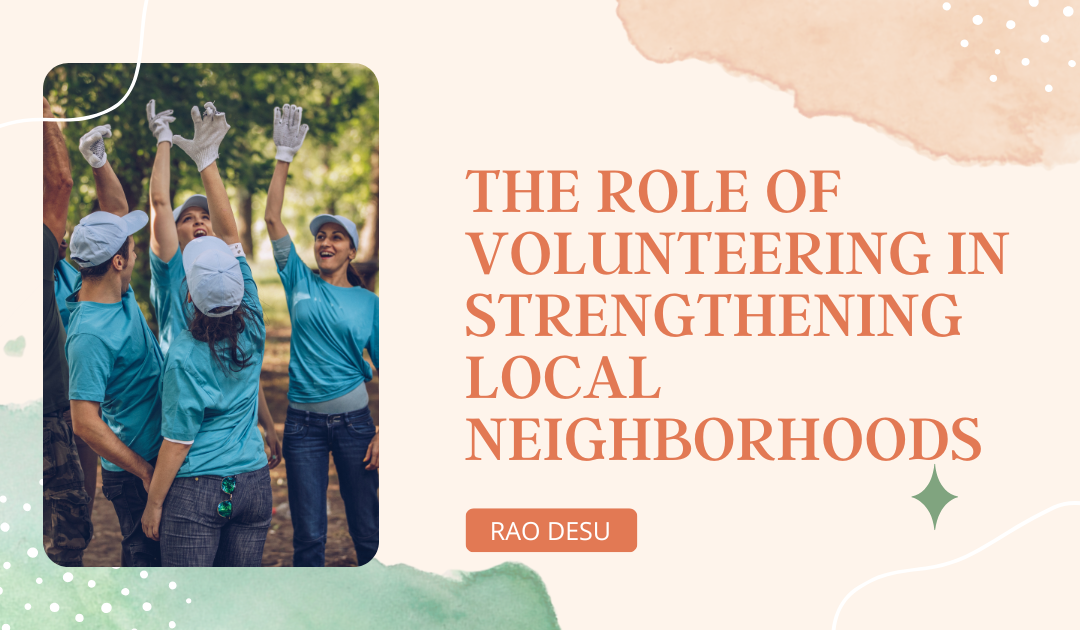
Volunteering is one of the most powerful ways to build stronger, more connected, and resilient local neighborhoods. When individuals give their time and skills to support their communities, they create a ripple effect of positive change that goes beyond the immediate act of service. Strong neighborhoods are not just defined by infrastructure and amenities but by the relationships, trust, and support systems built through acts of kindness and collective effort.
One of the most significant ways volunteering strengthens local neighborhoods is by fostering a sense of belonging. In an age where people often feel disconnected from those living around them, community service creates opportunities for residents to interact, collaborate, and build meaningful relationships. Whether through mentoring programs, environmental clean-ups, or food distribution drives, volunteering helps people develop a shared purpose and strengthen the social fabric of their communities.
Volunteering also enhances the overall well-being of communities by addressing specific local needs. Many neighborhoods face challenges such as food insecurity, lack of educational resources, homelessness, and environmental degradation. Volunteers who step in to support food banks, tutor students, assist in shelters, or organize sustainability initiatives help fill critical gaps that might otherwise go unaddressed. By taking direct action, community members ensure that their neighborhoods remain places where everyone has access to the resources they need to thrive.
Another important role of volunteering is the empowerment of individuals. Community service provides people with opportunities to develop leadership skills, gain experience, and build confidence. Young people, in particular, benefit from volunteering as it exposes them to different perspectives, teaches responsibility, and encourages civic engagement. Retirees and older adults also find fulfillment in giving back, staying active, and remaining involved in the social life of their neighborhoods.
Local businesses also play a crucial role in volunteering efforts. When businesses encourage employees to participate in community service projects, they not only contribute to the betterment of their neighborhoods but also foster a culture of corporate social responsibility. Many companies offer paid volunteer days or sponsor local initiatives, demonstrating a commitment to community well-being beyond their commercial interests. This collaboration between businesses and volunteers can lead to impactful projects such as job training programs, literacy campaigns, or neighborhood beautification efforts.
Volunteering also plays a vital role in strengthening emergency response and disaster preparedness within communities. In times of crisis, such as natural disasters, public health emergencies, or economic downturns, volunteers often step up to provide critical support. Local volunteer networks can mobilize quickly, distribute supplies, offer assistance to vulnerable populations, and provide emotional support to those affected. A neighborhood that has a strong culture of volunteerism is more resilient and better equipped to handle challenges.
Beyond direct service, volunteering helps bridge social divides and promote inclusivity. People from different backgrounds, cultures, and socioeconomic statuses come together when they engage in community work. This fosters mutual understanding and reduces prejudices that can sometimes divide neighborhoods. Volunteering creates opportunities for dialogue, collaboration, and the formation of bonds that might not have developed otherwise. Stronger social connections lead to safer, more harmonious communities where individuals feel valued and supported.
Technology has also transformed the way people volunteer in their neighborhoods. Online platforms and social media make it easier to find volunteer opportunities, organize events, and mobilize community efforts. Virtual volunteering, such as mentoring students online, offering remote legal assistance, or managing nonprofit social media accounts, allows individuals to contribute even if they cannot be physically present. These technological advancements ensure that more people can participate in strengthening their communities, regardless of their schedules or mobility limitations.
To sustain a thriving culture of volunteerism, communities need to encourage and recognize the contributions of their volunteers. Public appreciation, awards, and storytelling about the impact of local volunteers can inspire more people to get involved. Schools, religious institutions, and local governments can also integrate volunteer service into their programs, ensuring that the value of giving back is instilled in people from a young age.
Volunteering is the backbone of strong neighborhoods. It nurtures social connections, addresses pressing community needs, empowers individuals, and promotes resilience. Whether through small acts of kindness or large-scale initiatives, every contribution matters. A neighborhood where people actively support one another is not just a place to live—it becomes a thriving, vibrant, and compassionate community that benefits everyone.